Microworms
In stockPanagrellus redivivus
The go-to first food for betta, gourami, tetra and cory fry
Size±1–3 mm
Culture mediumOats / instant porridge paste
Temperature18–27 °C (room temperature)
DifficultyVery easy
R50 · 15 ml starter culture
Microworms (Panagrellus redivivus) and banana worms (P. nepenthicola) are kept identically — the banana worm is simply smaller, so the tiniest fry can eat it sooner. If you breed egg-layers, these two tubs are your insurance policy.
Keep the tub at room temperature (18–27 °C), out of direct sunlight. Worms should be climbing the sides within 3–7 days.
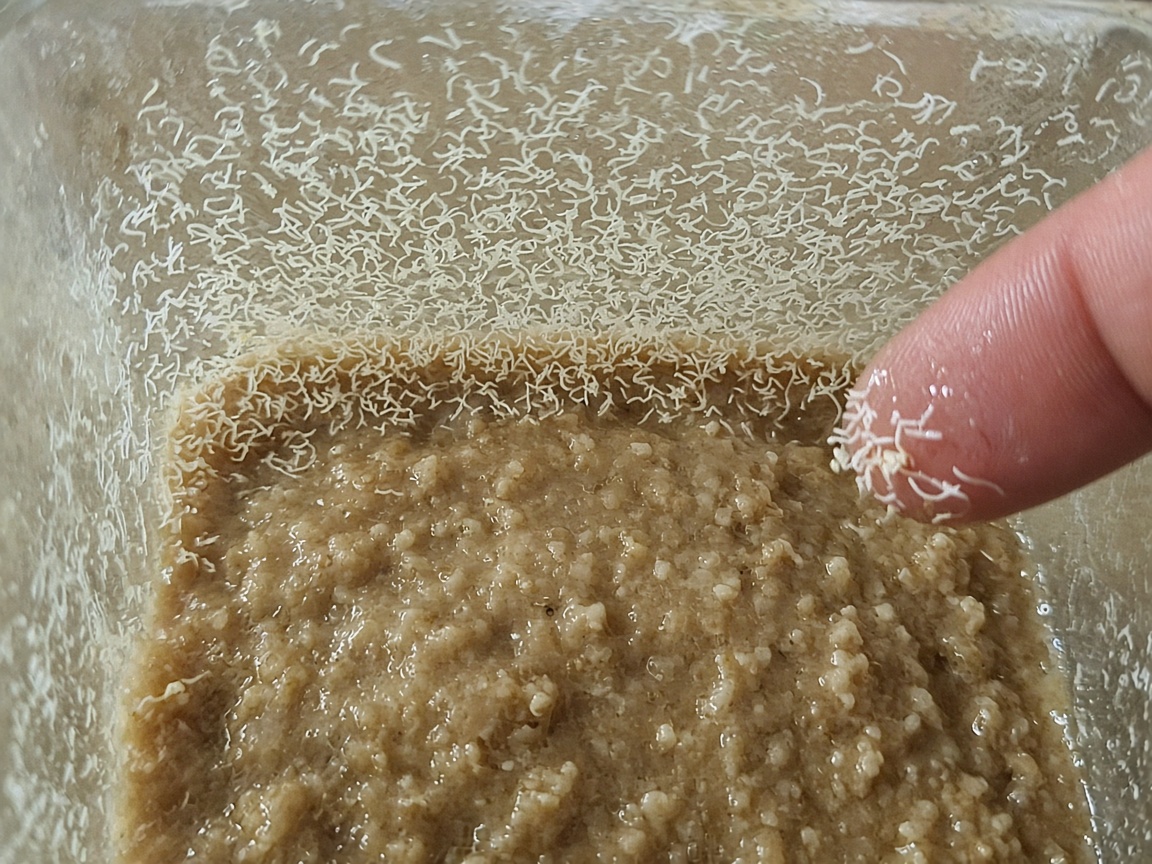
The worms do the work for you: they crawl up the walls above the medium. Wipe them off with a wet finger, cotton bud or small brush, swirl into a shot-glass of tank water, and pipette over your fry.
Microworms sink and survive only a short while in water, so feed small amounts often, close to the fry. Banana worms buy tiny fry their first crucial days before they graduate to microworms and baby brine shrimp.
A tub produces well for about 2–3 weeks, then sours. Start the next tub before you need it — two staggered tubs of each worm means you never face free-swimming fry with nothing to feed them.
Label every tub with the worm type and start date. Microworm and banana worm cultures look identical, and your fry can tell the difference even if you cannot.
Prefer to see it before you try it? These third-party videos walk through the same culture, step by step. (Overseas setups may differ slightly — follow the advice on this page for our cultures and conditions.)
Panagrellus redivivus
The go-to first food for betta, gourami, tetra and cory fry
R50 · 15 ml starter culture